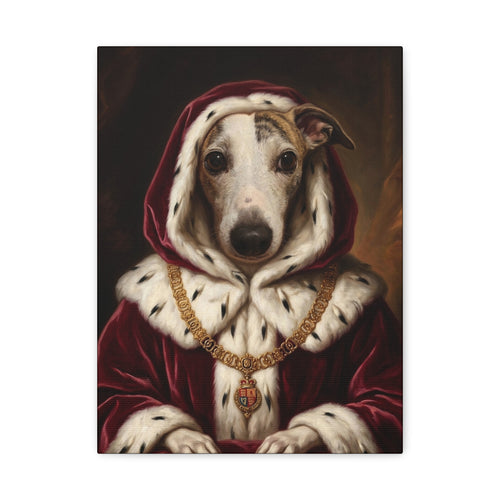
Cats were painted by the old masters long before they ruled the internet. In Renaissance and Baroque art they appear curled beside saints, stealing fish in kitchen scenes and sitting at the feet of nobles. What the old painters rarely did was give the cat the main role. A Renaissance cat portrait puts that right: your cat, front and centre, dressed and posed like the aristocrat it already believes it is.
Why cats make perfect Renaissance subjects
Court portraits of the fifteenth to seventeenth centuries were about one thing: authority. The sitter looks out calmly, slightly unimpressed, as if the viewer should be grateful for the audience. No animal does that expression better than a cat. Where a dog in royal dress looks joyfully ridiculous, a cat in royal dress looks entirely at home, which is exactly why these portraits are so funny and so elegant at the same time.
Cats also have the stillness of a classical sitter. The upright posture, the folded paws and the steady gaze translate naturally into the composition of a formal portrait, with the body turned slightly and the face toward the viewer.
Choosing a costume for your cat's coat
The right costume makes the colours of the coat glow. A few combinations that work beautifully:
- Ginger and orange tabbies: deep navy, forest green or a dark military jacket with gold braid. The contrast makes the orange look rich rather than bright.
- Black cats: crimson velvet and an ermine collar. White fur and red cloth frame a black face and let the eyes stand out.
- White and cream cats: burgundy, emerald or royal blue. Avoid pale costumes, which make the cat disappear into the clothes.
- Grey and blue cats: plum, mustard gold or deep teal, with gold jewellery to warm the cool tones.
- Tuxedo cats: they arrive already dressed for court. A simple velvet cape and a gold chain of office is all they need.
- Calicos and tortoiseshells: keep the costume simple and dark so the patchwork coat remains the star.
Taking a photo that becomes a masterpiece
Cats are famously difficult photographers' subjects, but you do not need a professional picture. You need a clear one.
- Use daylight. Sit your cat near a window during the day. Avoid flash, which flattens the face and turns the eyes green or white.
- Get down to eye level. Photos taken from above make the head look large and the body small. Crouch or lie on the floor.
- Wait for the alert look. A crinkled treat packet or a soft sound just above the camera will lift the ears and widen the eyes.
- Focus on the face. The eyes, nose and whiskers should be sharp. The background does not matter, as it will be replaced.
- Send the original. Screenshots and messaging apps compress the image. Upload the photo straight from your camera roll.
Our full guide to photographing your pet covers more tips, including how to work with nervous or very active cats.
What makes a portrait look like your cat
A generic painted cat is easy. A portrait that its owner recognises from across the room depends on small details: the exact colour of the eyes, the stripe pattern across the forehead, a white chin, a nick in one ear, the length of the whiskers. These are the details our artists study first and protect through every stage, from the preview to the printed canvas.
Choosing a size for your wall
Renaissance portraits were made to be looked up at, and a little scale goes a long way. A 12 x 16 inch canvas suits a shelf, desk or reading nook. The 16 x 20 inch size is our most chosen for living rooms and hallways. For a portrait that truly commands the room, above a sofa or a fireplace, choose 18 x 24 inches. Our canvas size guide explains how to measure your space.
Commission your cat's portrait
Send one photo, and within 24 hours we will email you a free preview of your cat as Renaissance royalty. One revision is included, nothing is printed until you approve, and shipping within the USA is free. See our custom cat portraits or commission your portrait now.